
Post‑Material and Feminist Art Practice
My practice is grounded in a post‑material and feminist understanding of space, presence and positionality. I work through situations in which meaning arises through action, relation and the spatial conditions that shape how bodies and contexts meet. These small, precise, embodied moments reveal how we exist in relation to space, time and context.

Space as a Relational Field
My practice begins in space, not as a neutral container, but as a relational field. From the start, my installations explored how bodies, objects and contexts shape one another. Space functions as a relational field; it shapes how we perceive, move and position ourselves within it. This spatial awareness forms the basis of my post‑material approach: meaning arises through what happens, not through what is.
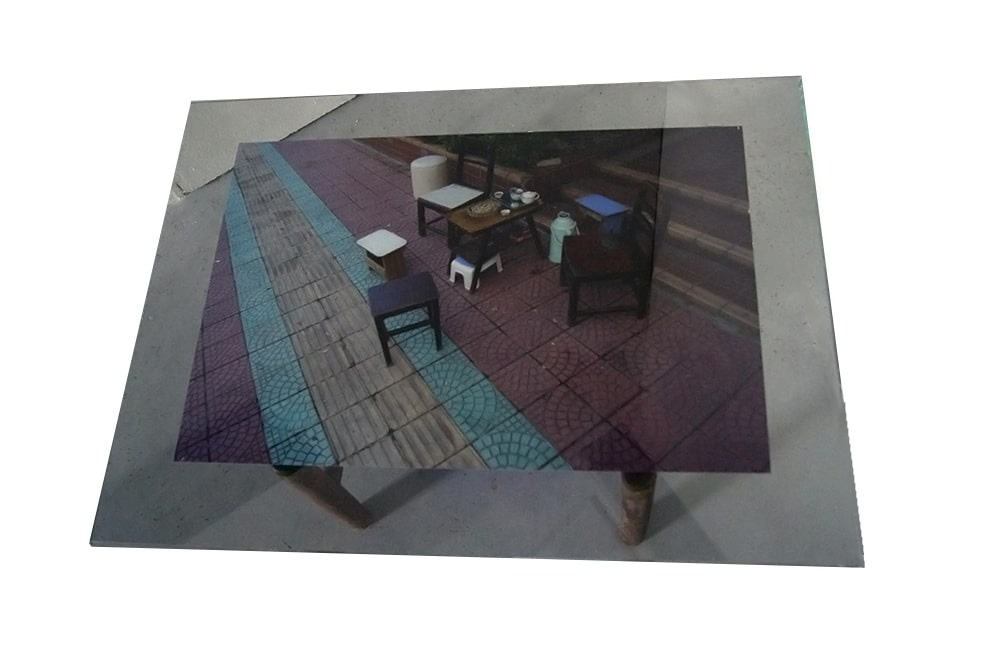
Photo: 'View', situational work, 2009.
A spatial situation in which temporal and positional shifts activate the relation between viewer, space and trace.
view work →
What Happens Between People and Contexts
As my work developed, the focus shifted from spatial form to situational dynamics. Encounters, gestures and shared moments became central. Projects such as '40 Titles' resulting in situational work 'The Address' made this explicit: the work emerged in the actual moment of exchange. In these situations, meaning is generated through relation, through what occurs between people, and through the positions they inhabit. The outcomes (a book, a photograph, a title) function as residues of these encounters, not as the work itself. This marks a shift from spatial form to situational operation.
Post‑Material Practice: Action, Relation, Trace
In my practice, meaning does not reside in the object alone. It develops through the interplay of action, relation and positionality, and through the structures that shape how something is perceived or experienced. Installations, drawings, sculptures and interventions unfold as situations in which meaning arises from what takes place, through gestures, encounters, shifts in attention, or the conditions that make presence felt. What becomes visible, or what is experienced, depends on the situation and the form the work takes.
This is the core of my post‑material practice: the work is generated through action and relation, not through material essence.
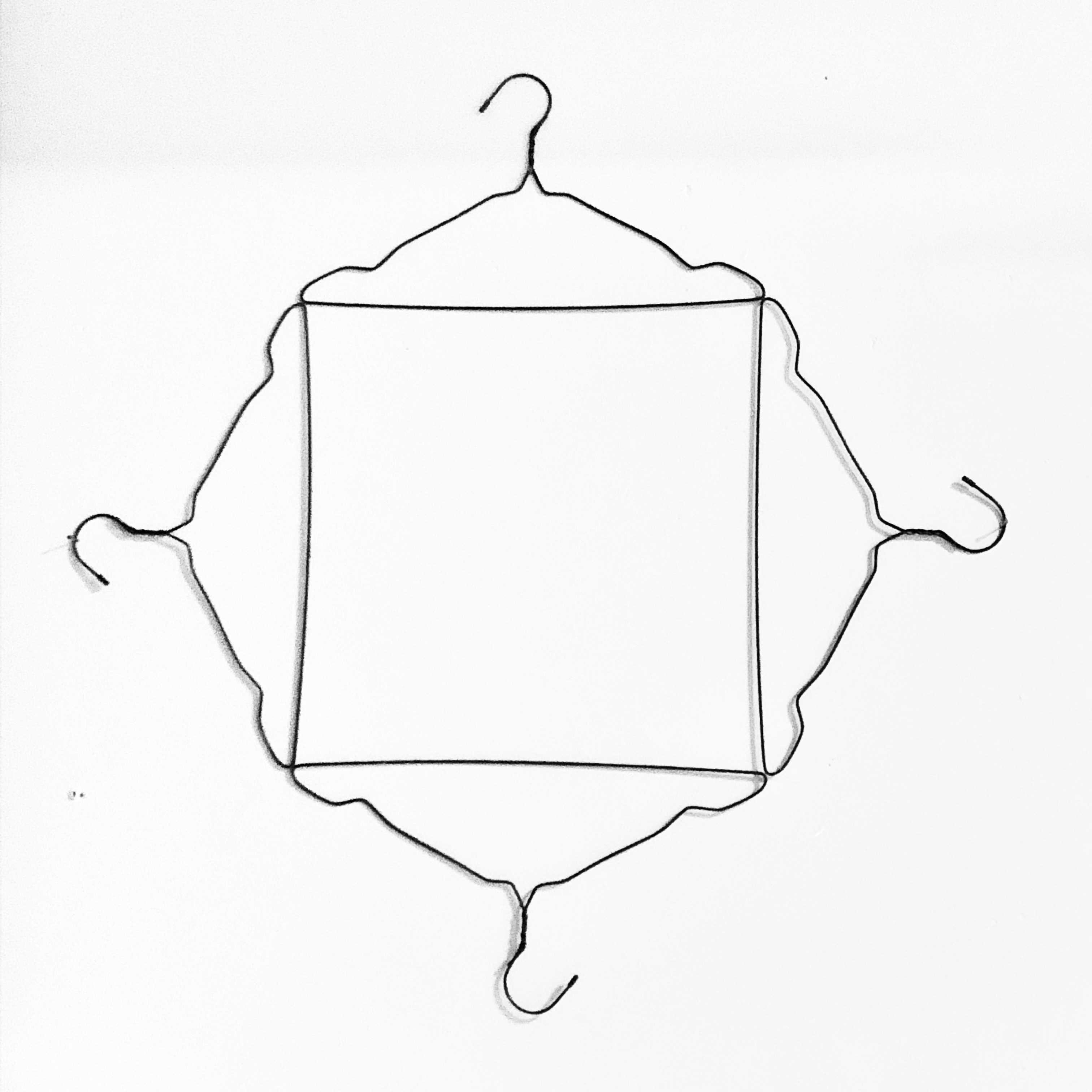
Photo: Secret Performance, post‑material action, 2025.
A configuration that establishes the primary form from which all further adjustments derive, remaining structurally tied to this single arrangement. Its form emerges from an unseen gesture, held in place only through the conditions that shaped it. In tandem with its counterpart in a non‑physical space, the physical configuration and the virtual occurrence constitute one distributed event: the gesture withheld, its presence divided between object and digital space.
Within this structure, the work operates as a situation rather than an autonomous form, the configuration embodies the moment of action, while the non‑physical component sustains the occurrence that cannot be perceived in the physical presentation.
Presence as a Political Gesture
My practice aligns with feminist thinking in its focus on positionality, as a way of understanding how bodies, histories and contexts intersect. Presence becomes a political gesture, a way of revealing structures, shifting awareness and opening space for agency. This feminist dimension is not thematic; it is structural. It shapes how the work is made, how it is encountered, and how meaning is produced.
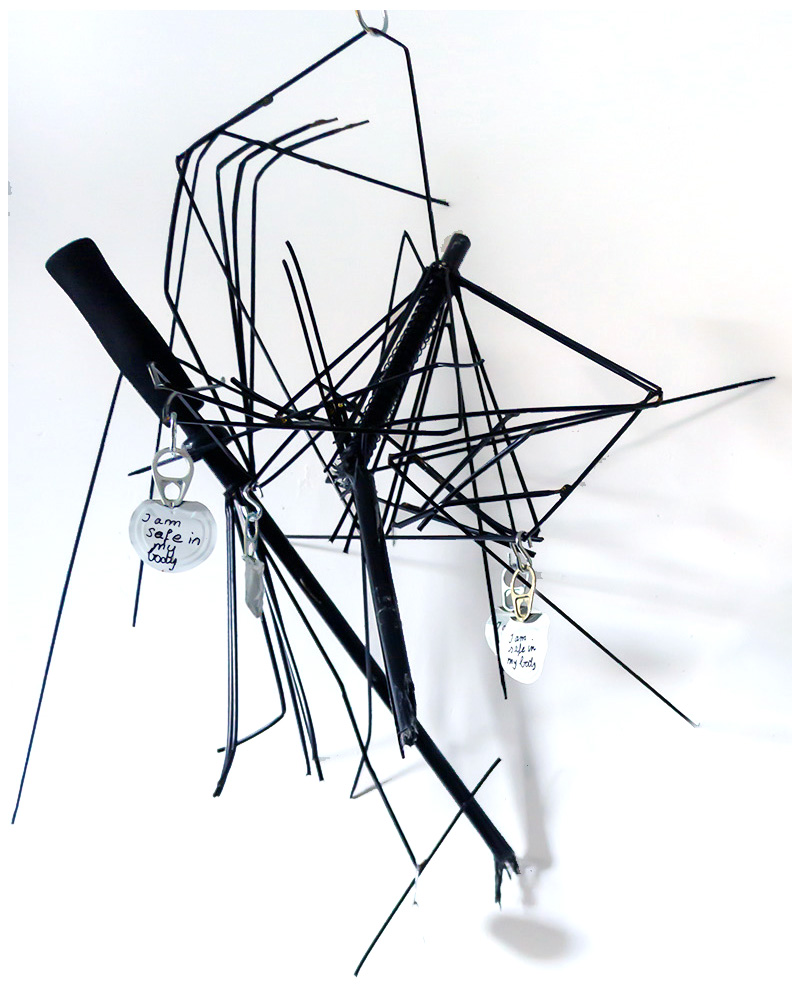
Photo: I am safe (in my body)
post‑material configuration, 2026.
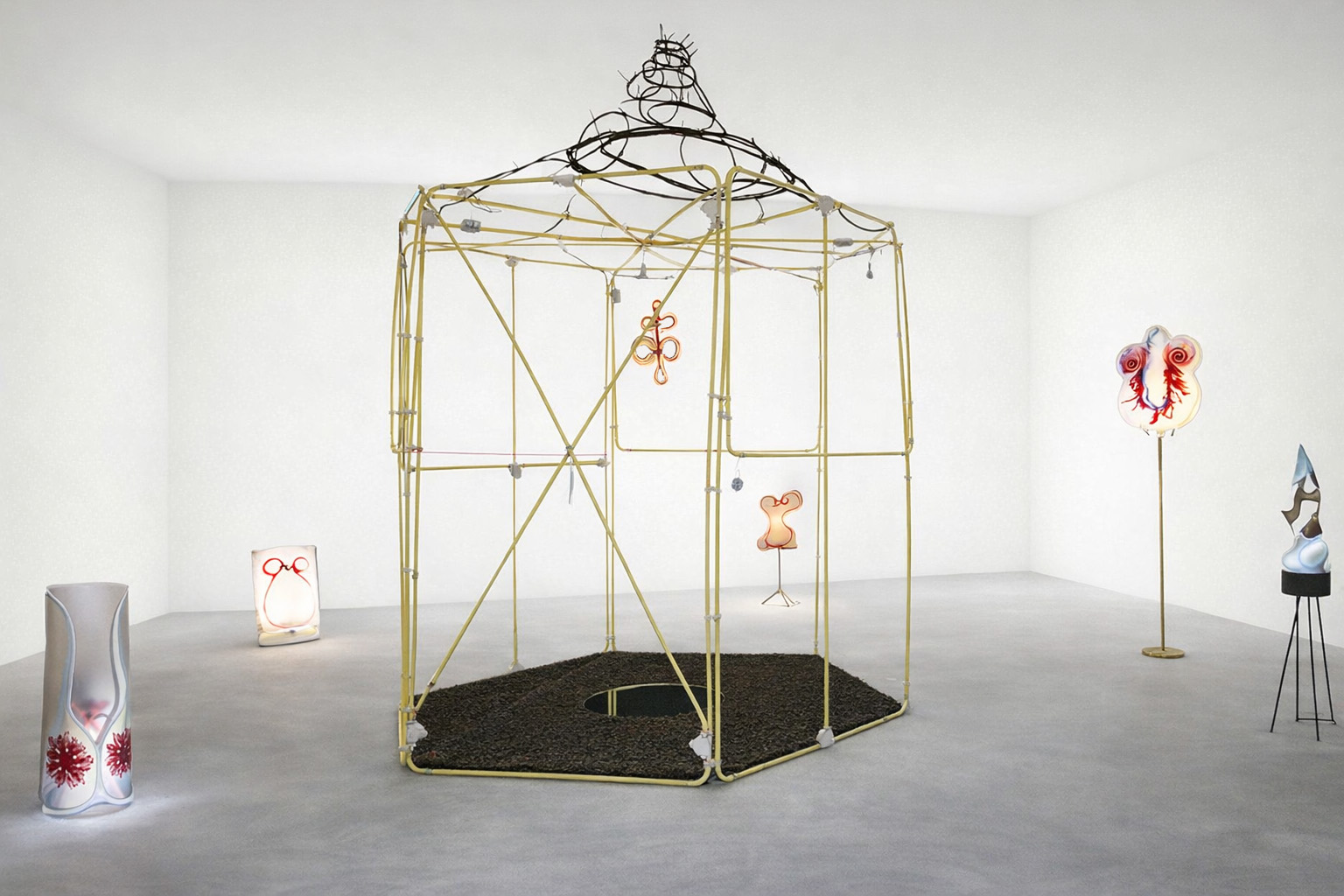
A configuration in which object, situation and action converge into a single state shaped by the conditions of its emergence. Rather than functioning as an autonomous form, the configuration operates as a situational element that can be activated performatively depending on context. Its role is contingent, relational, and inseparable from the circumstances that bring it into presence.
Transformative Practice: Awareness as Agency
In recent years, artistic research and coaching principles have converged in my installations. Presence, memory and interaction function as tools for transformation. The work creates conditions in which perception can shift, where awareness becomes a form of agency.
This is not activism as protest, but activism as reorientation: a way of creating space for change through attention, relation and embodied experience.
Photo: Family Fountain, experiential art installation, 2024.
view work →
Developmental Line
My practice has developed from spatial exploration into a situational, post‑material and feminist approach in which transformation emerges through action, relation and positionality.
This line connects my installations, interventions, drawings and encounters. It is not chronological but a development of awareness, position and practice.
Situational Works
Works that operate through spatial, temporal and contextual conditions.
view Situational Works →
Earlier Works
Works that explore how form emerges through action, resistance and residue. They mark the transition from image‑driven experiments to a practice grounded in position, context and presence.
view Earlier works →